
The Canterbury Tales: The General Prologue (Lines 1-18)
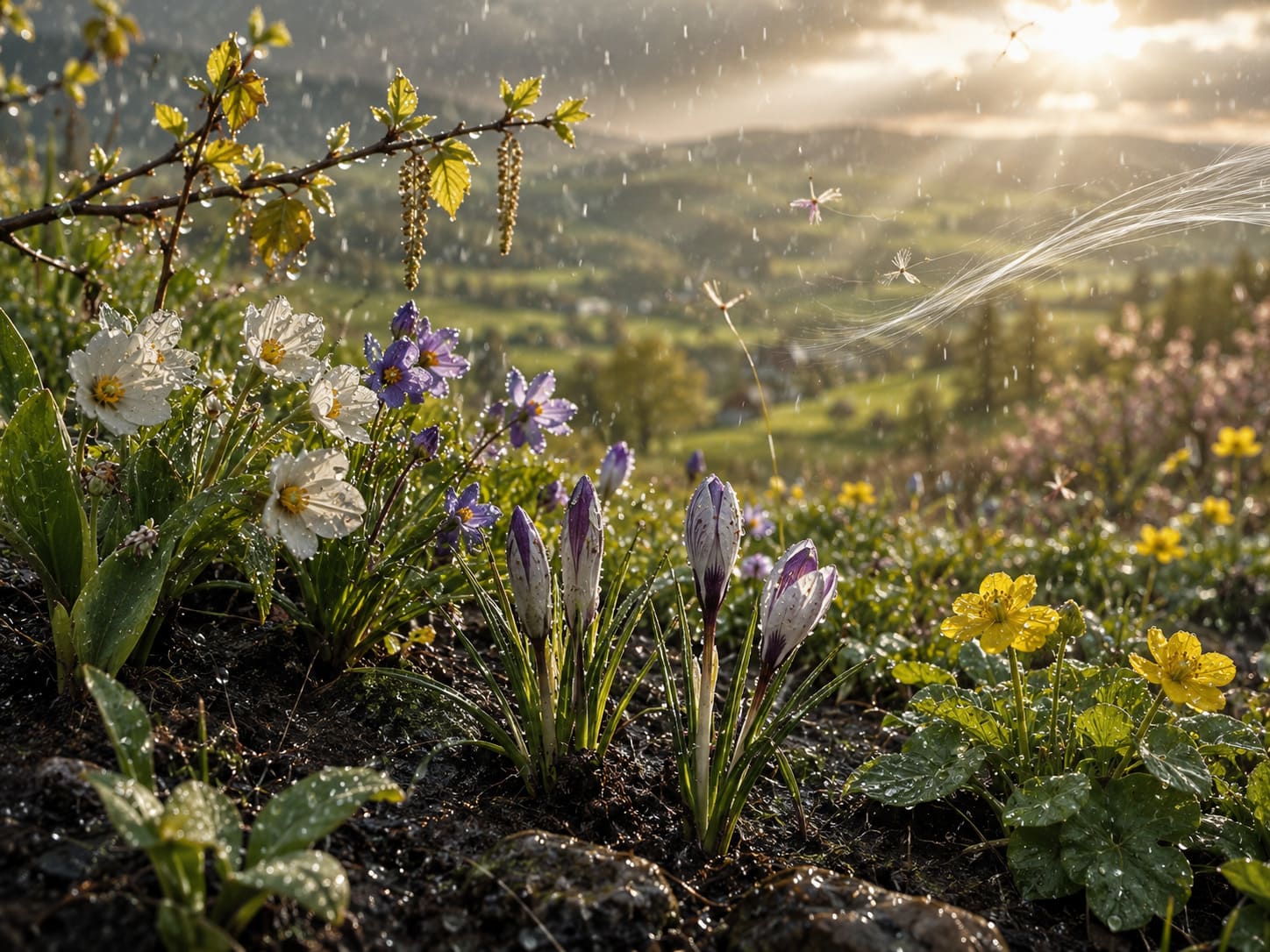
In lines 1–18 of the canterbury tales the general prologue, Chaucer masterfully intertwines the awakening of nature with the human soul. As April’s sweet rain clears the winter drought, this seasonal renewal naturally sparks a deep, instinctive desire to embark on a pilgrimage.


Lines 1–18: The Coming of Spring and the Call to Pilgrimage
Middle English
Whan that Aprill with his shoures soote
The droghte of March hath perced to the roote,
And bathed every veyne in swich licour
Of which vertu engendred is the flour;
Whan Zephirus eek with his sweete breeth
Inspired hath in every holt and heeth
The tendre croppes, and the yonge sonne
Hath in the Ram his half cours yronne,
And smale foweles maken melodye,
That slepen al the nyght with open ye
(So priketh hem Nature in hir corages),
Thanne longen folk to goon on pilgrimages,
And palmeres for to seken straunge strondes,
To ferne halwes, kowthe in sondry londes;
And specially from every shires ende
Of Engelond to Caunterbury they wende,
The hooly blisful martir for to seke,
That hem hath holpen whan that they were seeke.
— Geoffrey Chaucer, The Canterbury Tales: The General Prologue (Lines 1-18)
Modern English Translation
When April with its sweet-smelling showers
Has pierced the drought of March to the root,
And bathed every vein (of the plants) in such liquid
By which power the flower is created;
When the West Wind also with its sweet breath,
In every wood and field has breathed life into
The tender new leaves, and the young sun
Has run half its course in Aries,
And small fowls make melody,
Those that sleep all the night with open eyes
(So Nature incites them in their hearts),
Then folk long to go on pilgrimages,
And professional pilgrims to seek foreign shores,
To distant shrines, known in various lands;
And specially from every shire's end
Of England to Canterbury they travel,
To seek the holy blessed martyr,
Who helped them when they were sick.
Summary
When April comes with its sweet showers and soaks the dry earth of March right down to the roots, filling every plant's veins with moisture that gives rise to flowers, and when the gentle west wind breathes life into every wood and meadow, coaxing out tender young shoots, and the young sun has run half its course through Aries — then small birds sing sweetly, some of them sleeping all night with their eyes open, so strongly does Nature stir their instincts. At that time, people feel a longing to go on pilgrimages, and devoted travelers set out for distant shores, to far-off shrines known throughout many lands. Above all, from every corner of England, they make their way to Canterbury, to seek out the holy, blessed martyr who once helped them when they were ill.
Word Meanings
Shoures soote – Sweet, refreshing showers
Droghte – Dryness or drought
Veyne – Vein; channels carrying moisture in plants
Licour – Life-giving moisture
Vertu – Generative Power or life-giving force
Engendred – Produced or created ; Brought into being
Zephirus – The gentle west wind (A figure from classical mythology)
Holt – Wood or forest
Heeth – Open countryside or heath
Tendre croppes – New delicates shoots
Ram – The zodiac sign Aries
Smale foweles – Small birds
Priketh – Stimulates or inspires
Corages – Hearts, minds, or spirits
Longen – Desire eagerly
Palmeres – Professional pilgrims who had visited the Holy Land
Straunge strondes – Foreign lands or distant shores
Ferne halwes – Distant holy shrines
Wende – Travel or go
Hooly blisful martir – Saint Thomas Becket
Seeke – Sick or ill
Explanation
Chaucer begins The General Prologue by presenting a vivid picture of spring, the season of renewal and fresh beginnings. April's gentle showers remove the dryness left by March and fill the earth with life-giving moisture, allowing flowers to bloom. The soft west wind, Zephyrus, and the warm spring sun work together to awaken forests, fields, and tender plants. From there, Chaucer shifts to the animal world, describing birds who sing all night, so charged with Nature's restless energy that they barely sleep. The birds sing joyfully because Nature fills them with energy and the instinct to celebrate the new season. Every part of the natural world appears alive, vibrant, and full of hope.
There's a wry, knowing humor in the comparison: our spiritual impulses are bound up with the same seasonal energy that governs the natural world, as though piety and springtime restlessness come from the same root.
The awakening of nature is closely connected to human life. Just as birds naturally sing and plants begin to grow, people also feel an inner desire to travel. The beauty and freshness of spring inspire them to undertake pilgrimages, not merely for adventure but also for spiritual devotion. Pilgrims visit famous holy shrines in different lands, and people from every corner of England especially travel to Canterbury to pray at the shrine of Saint Thomas Becket. They seek his blessings because he was believed to heal the sick and offer comfort to those in distress. Thus, Chaucer beautifully links the renewal of nature with the spiritual renewal of humanity, making spring the perfect beginning for the pilgrims' journey.
Literary Devices
Personification: April, Nature, and Zephyrus are given human qualities and the power to revive the world.
Mythological Allusion: Zephyrus, the Greek god of the west wind, symbolizes the gentle breeze of spring.
Religious Allusion: The holy martyr refers to Thomas Becket, whose shrine at Canterbury Cathedral was a famous pilgrimage destination.
Imagery: Rich descriptions of rain, flowers, forests, birds, and the joyful atmosphere of spring.
Symbolism: Spring symbolizes renewal, hope, new beginnings, and spiritual awakening. (both of the natural world and of human spiritual life.)
Significance
These opening lines do far more than describe weather — they establish the entire premise of the Canterbury Tales. The season awakens both the physical world and the human spirit, encouraging people to seek faith, healing, and companionship through pilgrimage. By linking the natural cycle of renewal to the human urge to seek meaning and healing, Chaucer frames pilgrimage as something almost instinctive, arising from the same forces that move the natural world. This beautiful introduction naturally leads to the gathering of the diverse group of pilgrims whose stories form the rest of the work.